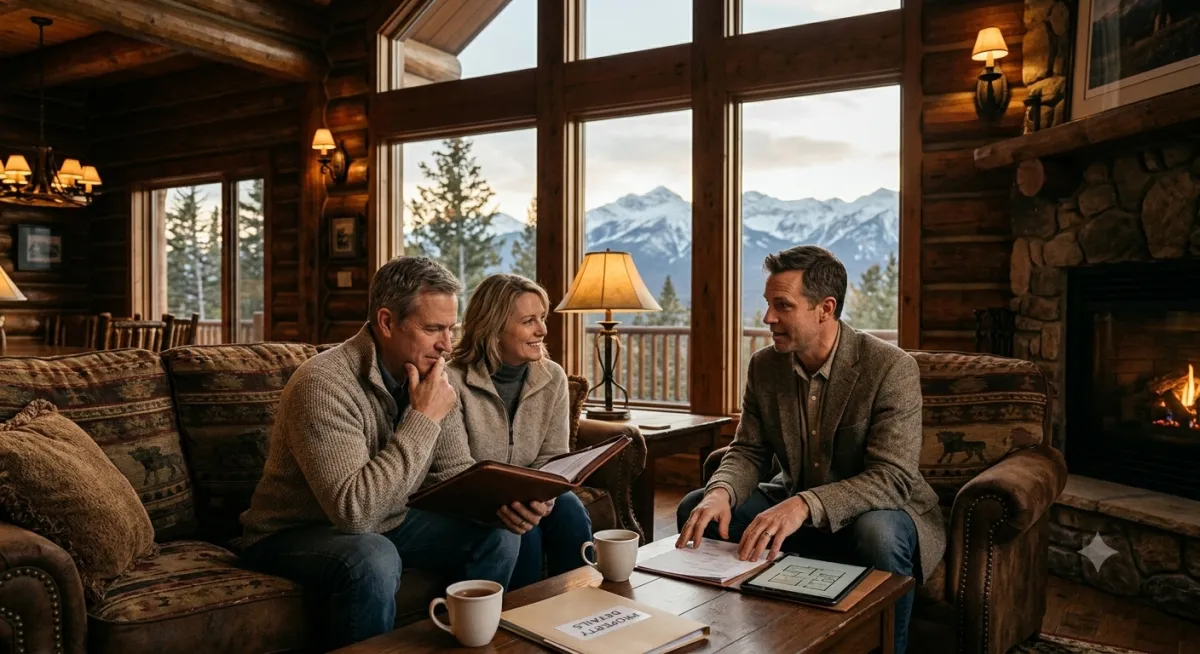
What Should You Look for in a Real Estate Agent in the Gallatin Valley?
The qualities that actually matter, the questions to ask, the new commission rules, and how to verify who you are hiring.
You are about to hand someone the biggest financial decision of your life, and you want to choose well. This post is for buyers and sellers in the Gallatin Valley deciding which agent to work with, and it covers the qualities that genuinely matter, the questions worth asking, how agent pay changed in 2024, and how to verify a license. Choosing the right agent is mostly about knowing what to look for, so here is what to look for.
Short answer: Look for an agent with deep local knowledge, full-time commitment, honesty that sometimes costs them a sale, and strong communication. Verify the license through the Montana Board of Realty Regulation, ask about recent local and rural sales, and understand the new buyer-agency agreement rules that took effect in 2024. The right agent fits your situation and tells you the truth, not just what you want to hear.
What should you look for in a real estate agent in the Gallatin Valley?
Five things: local expertise, honesty, full-time availability, clear communication, and the right personal fit. The valley is a specialized market with rural systems, varied towns, and fast-moving conditions, so an agent's genuine local knowledge matters more here than almost anywhere. Above all, you want someone who tells you the truth, even when it is not what you hoped to hear.
The agents worth hiring share a pattern. They know the difference between Manhattan, Belgrade, Bozeman, and Three Forks down to the neighborhood and the commute. They work real estate full time, so they are available when a deal needs attention. They return calls. And they are willing to talk you out of a bad decision, which is the single most valuable and most overlooked quality in this business.
What you do not need is the flashiest marketing or the biggest billboard. You need someone whose knowledge and judgment protect you through a complicated transaction. The rest of this post breaks down how to find that person, what to ask them, and how to confirm they are who they say they are.
Why does local knowledge matter so much in the Gallatin Valley?
Because the valley is full of specifics a general agent misses. Rural properties have wells, septic systems, water rights, and access questions that change a deal. Each town has its own character, school district, and commute. Prices and conditions shift quickly. An agent who truly knows the local ground catches problems and opportunities a newcomer never sees.
This is the part where local experience earns its keep. An agent who knows the valley understands that a property with a private well needs water testing, that septic placement follows specific rules, and that legal road access on rural land has to be verified, not assumed. They know which neighborhoods flood, which roads the county does not maintain, and how a 25-minute difference in commute changes a daily life. That knowledge is the difference between a smooth purchase and an expensive surprise.
It matters on the selling side too. Pricing a Gallatin Valley home correctly requires knowing what comparable properties actually sold for in that specific town and price band, not a rough regional average. In the balanced 2026 market, where homes sit longer and price reductions are common, that local pricing judgment is what keeps a listing from languishing. Our guide to whether now is a good time to buy shows how much the local picture has shifted, and why a generic read of the market does not serve you.
What questions should you ask before hiring an agent?
Direct ones, about experience and fit. The right questions surface whether an agent is full-time, locally experienced, and genuinely a match for your situation. You are interviewing them for an important job, so treat it like an interview rather than a formality.
Here are the questions worth asking:
Are you a full-time agent? Part-timers can be hard to reach when a deal needs fast attention.
How long have you worked in the Gallatin Valley specifically? Local tenure matters more than years elsewhere.
How many homes have you sold in this area in the last year, and at what price points? Recent, relevant activity tells you they are active where you are buying or selling.
Do you have experience with rural property, wells, and septic? Critical if you are looking at acreage.
Can you share references from recent clients? A good agent offers them readily.
How and how often will you communicate with me? Set the expectation up front.
Who is your supervising broker, and are you a broker or a salesperson? This tells you how their license works.
The answers matter less for any single perfect response than for how openly the agent answers. Someone confident in their work will welcome these questions. Someone who deflects or gets defensive is telling you something useful.
How do you know if an agent is honest with you?
Watch whether they ever tell you something you do not want to hear. An honest agent points out a home's flaws, prices your listing realistically even when a higher number would win your business, and is willing to advise against a purchase that is wrong for you. Honesty that occasionally costs the agent a sale is the kind worth paying for.
This is the quality I would weight above all others, because real estate is full of incentives to tell you what you want to hear. An agent who only ever agrees with you, praises every house, and encourages every offer is not necessarily serving you. The one who says "this home is lovely but the septic is at the end of its life" or "I think this listing price is too high for what the comparable sales support" is the one protecting your interests.
You can usually feel this in the first conversation. Does the agent ask about your real situation and budget, or just push toward a transaction? Do they explain tradeoffs honestly, or smooth everything over? An agent who is candid early will be candid when it counts, at the negotiating table and during the inspection. That same candor is what keeps deals from falling apart, a pattern I covered in why real estate deals fall apart.
How are real estate agents paid now, after the 2024 commission changes?
Differently than before, and you need to understand it. As of August 2024, a national settlement changed how buyer agents are paid. Buyers now sign a written buyer-agency agreement before touring homes, which spells out exactly what their agent will be paid and makes clear that commissions are negotiable and not set by law.
Here is what actually changed. Under the National Association of Realtors settlement, agents who work with buyers must enter a written agreement before touring a home, and that agreement has to state the agent's compensation clearly. Buyer-agent commissions can no longer be advertised on the MLS. Sellers can still offer to cover a buyer's agent compensation through a concession, but it is now negotiated directly rather than displayed, so the conversation about who pays what happens up front.
A couple of practical points. The change means you should expect to discuss your agent's compensation openly and early, which is healthy. And despite the settlement's intent to lower costs, commissions have not dropped much, with the average buyer-agent commission hovering around 2.4 percent into 2025 and 2026. What matters is that fees are negotiable and that a good agent will explain their agreement plainly, in language you understand, rather than rushing you past it. For how compensation fits into your total costs, our closing cost guide lays out the full picture.
How do you verify an agent's license and background in Montana?
Check the state's license database, which takes two minutes. Every real estate agent in Montana is licensed through the Board of Realty Regulation, and you can confirm a license, see whether the person is a broker or a salesperson, and check for any disciplinary history through the state's public lookup. It is a simple step that surprisingly few people take.
The tool you want is the Montana Department of Labor and Industry's Licensee Lookup, which lets you search any agent by name and confirm their license is active and in good standing. The Board of Realty Regulation oversees licensing for the state, and you can reach them directly with questions about a licensee.
It helps to understand the difference between the two license types. A real estate salesperson must be sponsored and supervised by a licensed broker. A broker has completed additional education and at least two years of experience, can operate independently, and can supervise other agents. Neither is automatically better for you, but knowing which you are working with, and who supervises them if they are a salesperson, tells you how the relationship is structured. For the record, I am a broker and owner, which simply means the buck stops with me on the work I do for you.
What are the red flags to watch for when choosing an agent?
A handful of clear warning signs. Watch for part-timers who are hard to reach, agents who push urgency instead of giving you room, those with no recent local sales, anyone who cannot explain the buyer agreement plainly, and poor communication from the very first contact. How an agent behaves while courting your business is how they will behave once they have it.
The biggest red flags in practice:
Pressure and urgency. "You have to decide today" is rarely true and usually a tactic. A good agent gives you room to think.
No local track record. An agent who has not closed homes in your towns and price range recently is learning on your transaction.
Vague answers about compensation. Since 2024, your agent must put their fee in writing. If they cannot explain it clearly, that is a problem.
Slow or sloppy communication. If they are hard to reach while trying to win you, they will be harder to reach during a deal.
Only ever telling you good news. An agent who never points out a downside is not protecting you.
Trust your read here. You are going to spend weeks working closely with this person through a stressful, high-stakes process, and the right fit is someone you trust to be straight with you and to stay on top of the details. The agents who do this well make the whole thing calmer, and guiding people through it carefully, catching the small problems before they grow, is the part of this work I care about most. If you want to talk through your situation with no pressure attached, that conversation is always open.
Nancy Clark
Broker/Owner, AmeriMont Broker Group
Manhattan, Montana
[email protected]
nancyclarkbroker.com
Nancy Clark is the Broker and Owner of AmeriMont Broker Group, serving Manhattan, Amsterdam, Churchill, and communities across southwest Montana. With more than $135 million in closed sales and over a decade of experience in Montana real estate, Nancy brings the care of a neighbor and the skill of a seasoned professional to every transaction. Reach her at [email protected] or visit nancyclarkbroker.com.
Frequently Asked Questions
What should I look for in a real estate agent in the Gallatin Valley?
Look for deep local knowledge, full-time commitment, honesty, and strong communication. The valley's rural systems and varied towns make genuine local expertise essential, and the most valuable agents are willing to tell you the truth even when it costs them a sale. Verify the license and ask about recent local and rural sales.
What questions should I ask before hiring an agent?
Ask whether they work full-time, how long they have worked in the Gallatin Valley, how many homes they have sold locally in the past year and at what price points, whether they have rural and well-septic experience, for client references, how they will communicate, and who their supervising broker is. How openly they answer matters as much as the answers.
How are buyer agents paid after the 2024 commission changes?
Since August 2024, buyers sign a written buyer-agency agreement before touring homes that states their agent's compensation and confirms fees are negotiable. Buyer-agent commissions are no longer advertised on the MLS, though sellers can still offer to cover them through a concession. Discuss compensation openly with your agent up front.
Did real estate commissions go down after the NAR settlement?
Not significantly. Despite the settlement's intent to lower costs, the average buyer-agent commission has stayed around 2.4 percent into 2025 and 2026. The bigger change is transparency: fees must now be put in writing and are clearly negotiable. A good agent will explain their compensation agreement plainly rather than rushing you past it.
How do I verify a real estate agent's license in Montana?
Use the Montana Department of Labor and Industry's Licensee Lookup to search any agent by name and confirm their license is active and in good standing. The Board of Realty Regulation oversees licensing. The lookup also shows whether the person is a broker or a salesperson and any disciplinary history.
What is the difference between a broker and a salesperson in Montana?
A salesperson must be sponsored and supervised by a licensed broker and completes 70 hours of pre-licensing education. A broker has additional coursework and at least two years of experience, can work independently, and can supervise other agents. Knowing which you are working with tells you how the relationship is structured.
What are red flags when choosing a real estate agent?
Watch for high-pressure urgency, no recent sales in your towns and price range, vague answers about compensation, slow or sloppy communication, and an agent who only ever tells you good news. How an agent behaves while trying to win your business is a strong preview of how they will behave once hired.
Does it matter if my agent works full-time?
Yes. Real estate deals move quickly and often need attention on short notice, during inspections, appraisals, and negotiations. A full-time agent is available when those moments come, while a part-timer juggling another job may not be reachable when a deal needs a fast decision. Availability can be the difference between closing and losing a home.


