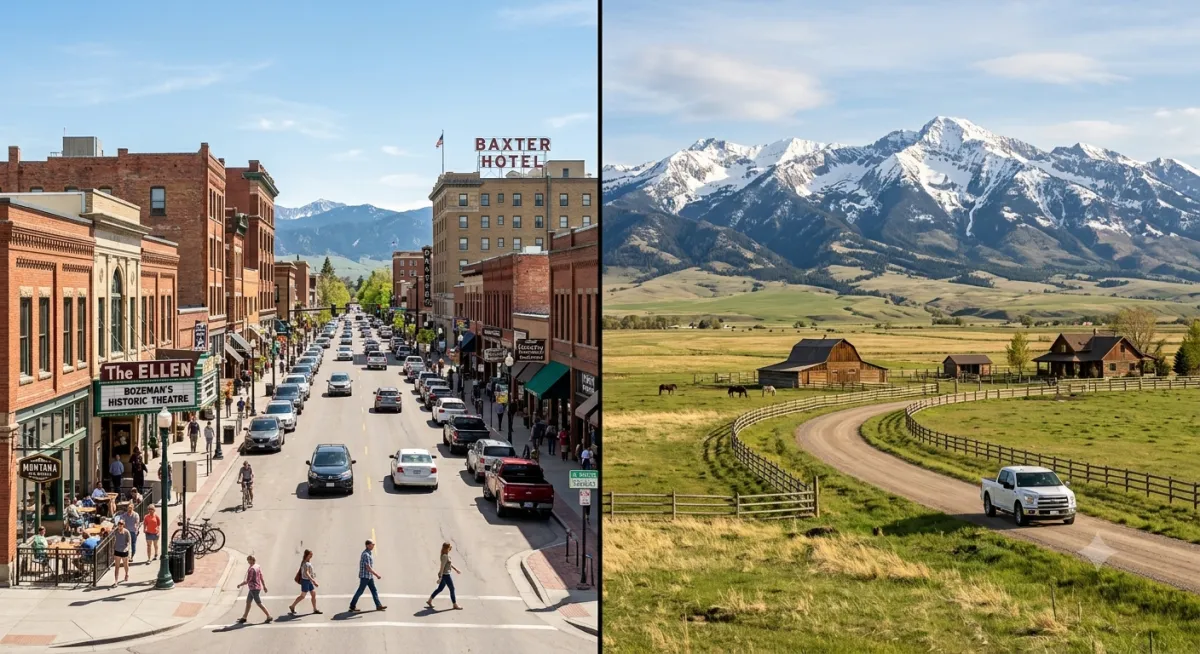
Should You Buy in Downtown Bozeman or the Suburbs?
The honest tradeoffs between Main Street walkability and a yard in Belgrade, from someone who shows both every week.
If you are weighing a condo two blocks off Main Street against a new build with a three-car garage in Belgrade, you are asking the right question early. This is for buyers trying to decide between the walkable Bozeman core and the more spacious, lower-priced communities around it. Here is what you actually trade in each direction, with current 2026 numbers, so you can pick the side that fits the life you are building.
Short answer: which one should you pick?
Buy downtown if walkability, Main Street, and a low-maintenance home matter more to you than square footage. Buy in the suburbs if you want more house, a yard, and a newer build for less money, and you do not mind driving for errands. Downtown costs more per square foot. The suburbs cost you time in the car.
Most buyers already lean one way before they call me. The job is making sure the tradeoff you are accepting is the one you actually want to live with five years in.
Downtown Bozeman vs. the suburbs at a glance
Here is the comparison most buyers want above everything else. Prices reflect early-to-mid 2026 figures and shift by season and subdivision, so treat them as the starting line, not the finish.
What is the real price difference between downtown and the suburbs?
The suburbs give you more house for the money, often by a wide margin. As of June 2026, the median Bozeman home sits around $825,000, with single-family homes inside the city near $726,000 in early 2026 and condos closer to $480,000. Belgrade's median runs about $544,900, and new construction there typically costs $100,000 to $200,000 less than a comparable build inside Bozeman city limits.
That spread is the whole decision for a lot of buyers. Downtown, your money buys location and character: a townhome you can walk from, or an older home on a smaller lot near Main Street. In Belgrade or the outer subdivisions, the same budget buys more bedrooms, a real yard, and a newer furnace you will not replace for fifteen years.
One caution on the suburbs. Not every outlying area is cheaper. Four Corners, the stretch between Bozeman and Big Sky, carries a median closer to $1,065,000 because of larger lots and higher-end builds. "Suburb" does not automatically mean affordable here. It means you have to look community by community, which is exactly what my $400,000 to $600,000 purchasing power guide walks through town by town.
What is daily life like downtown versus the suburbs?
Downtown, you trade space for the ability to leave the car parked. The suburbs flip that: more room, but most errands mean driving. Bozeman's overall Walk Score is 47, in the "somewhat walkable" range, but the downtown core scores far higher because shops, restaurants, and groceries cluster within a few blocks.
Living near Main Street means coffee, dinner, the Bozeman Public Library, and the Gallatin Valley Farmers' Market are a walk away. You are close to Montana Ale Works and the summer art walks, and you can catch the Sweet Pea Festival without finding parking. The flip side: smaller homes, older systems, street parking, and more noise on festival weekends.
The suburbs run quieter. In Belgrade, Four Corners, or Bozeman's west-side subdivisions, you get a garage, a yard the dog can use, and newer construction. The cost is a 10 to 30 minute drive for dinner downtown and a school run that depends on which district you land in. If quiet is the whole point, my guide to the quietest Bozeman neighborhoods covers the calmest pockets inside the city before you go all the way out.
What are the tradeoffs of buying downtown?
Downtown rewards you with walkability and character, and charges you for it in price per square foot, space, and sometimes added assessments. You are buying location first and the building second. For the right buyer, that math works. For a buyer needing four bedrooms and a yard, it usually does not.
What you gain:
Walkability. Work, dinner, and errands on foot, with the car parked most days.
Character. Bozeman's Main Street Historic District runs roughly from Rouse to just west of Willson, full of homes and storefronts with real age and story.
Low maintenance. A downtown condo or townhome often means someone else handles the roof and the snow.
Resale demand. Walkable, central homes hold a steady buyer pool.
What you give up:
Space. Smaller lots, smaller homes, less storage.
Price per square foot. You pay a premium for the address.
Possible special assessments. Some areas carry Special Improvement District charges for streets, sidewalks, or lighting, layered on top of regular property taxes. Always ask what is attached to the parcel before you write the offer.
What are the tradeoffs of buying in the suburbs?
The suburbs give you space, a newer home, and a lower price, and ask for your time on the road in return. For buyers who value space over walkability, that is often the easy trade. For someone who wants to walk to dinner, it is a daily reminder of what they gave up.
What you gain:
More house for the money. New builds in Belgrade start in the high $400,000s, well under Bozeman city pricing.
Newer systems. Fewer surprises in the first decade of ownership.
Space. Garages, yards, and room to grow.
Builder room to negotiate. With homes sitting 80 to 100 days on the market in 2026, builders are more willing to talk incentives than during the bidding-war years.
What you give up:
Drive time. Ten to thirty minutes to downtown, more in winter weather.
Walkability. Errands mean the car.
HOA and road realities. Many suburban subdivisions run an HOA, often because the county does not maintain neighborhood roads, so owners assess themselves for plowing and upkeep. Read the budget before you buy.
For the full breakdown of where space meets value, my guide to acreage near Bozeman without Bozeman pricing is the companion piece to this one.
Who should buy downtown, and who should buy in the suburbs?
Match the home to the life, not the other way around. Here is how the decision usually sorts out for the buyers I work with across the Gallatin Valley.
Buy downtown if you are:
A single person or couple who wants to walk to work and dinner
A downsizer trading the yard and the stairs for a low-maintenance, central home
A buyer who values character and location over square footage
Someone who will genuinely use Main Street several times a week
Buy in the suburbs if you are:
A family needing bedrooms, a yard, and a specific school district
A remote worker who wants a home office and does not commute downtown daily
A buyer stretching a budget who wants the most house per dollar
Someone who prefers newer construction and fewer near-term repairs
When should you skip both?
Sometimes the right answer is neither. If your budget does not stretch to downtown and the nearby suburbs feel too busy or too pricey, the smaller valley towns deliver more home and a different pace. Manhattan, Three Forks, and Belgrade's quieter edges often beat both downtown and the close-in suburbs on value.
Skip both if walkability is not actually a priority you will use, and the close-in suburbs still feel expensive. Manhattan sits about 25 minutes west with a strong school district and lower prices. Three Forks stretches your dollar further still. Before you commit to the Bozeman-versus-suburb frame at all, it is worth knowing the commute times across the whole valley, because the right town might be one you have not driven through yet.
The downtown-or-suburbs question is real, but it is not the only question. The best home is the one where the daily tradeoff, walking or driving, space or character, still feels right on an ordinary Tuesday in February.
Frequently asked questions
Is downtown Bozeman more expensive than the suburbs?
Generally yes. Downtown single-family homes run $800,000 and up, while Belgrade's median sits near $544,900 and new construction there costs $100,000 to $200,000 less than comparable Bozeman city builds. The exception is Four Corners, a suburb with a median above $1 million.
How walkable is downtown Bozeman?
The downtown core is the most walkable part of the city, with shops, dining, and groceries clustered along Main Street within a few blocks. Bozeman's overall Walk Score is 47, but downtown scores much higher because amenities concentrate there rather than spreading along major roads.
What are the downsides of buying a home downtown?
Smaller lots, older homes, higher price per square foot, street parking, and possible Special Improvement District assessments for streets or sidewalks. Festival weekends bring noise and crowds. You trade space for location.
Are the suburbs around Bozeman a better value?
Often, yes, especially Belgrade, where new construction starts in the high $400,000s. You get more square footage, newer systems, and a yard. The tradeoff is a 10 to 30 minute drive downtown and, in many subdivisions, an HOA that handles road maintenance.
Do suburban Bozeman neighborhoods have HOAs?
Many do. Because Gallatin County generally does not maintain neighborhood roads, subdivisions often form HOAs to handle plowing and upkeep through assessments. Always review the HOA budget and rules before closing.
Which side offers more space for the money?
The suburbs usually win on space. They offer more bedrooms, yards, garages, and access to specific school districts at a lower price. Downtown trades square footage for walkability.
How long are homes sitting on the market in 2026?
Bozeman-area homes are averaging roughly 80 to 100 days on the market in 2026, a meaningful shift from the bidding-war years. That gives buyers more time to compare, and gives suburban builders more reason to offer incentives.
Nancy Clark is the Broker and Owner of AmeriMont Broker Group, serving Manhattan, Amsterdam, Churchill, and communities across southwest Montana. With more than $135 million in closed sales and over a decade of experience in Montana real estate, Nancy brings the care of a neighbor and the skill of a seasoned professional to every transaction. Reach her at [email protected] or visit nancyclarkbroker.com.


