What Is It Like to Live in Bozeman Year-Round?
A local's honest look at the four seasons, past the postcard.
Visiting Bozeman in July tells you almost nothing about living here in February. If you are thinking about a move and want to know what the place is actually like once the summer crowds leave and the snow sets in, this is the season-by-season picture a local would give you: the good, the genuinely hard, and the things the tourism brochures leave out.
Short answer: Bozeman has four real seasons with big swings, from teens-and-snow winters to low-80s summers, at nearly 4,900 feet of elevation. Life here runs on the outdoors and the calendar: ski season, mud season, tourist season, and the quiet golden fall that locals love most. It rewards people who like weather and the outdoors, and it tests people who need mild winters and city amenities.
What Is It Like to Live in Bozeman Year-Round?
What is living in Bozeman actually like year-round?
What are Bozeman winters really like?
What happens in spring in Bozeman?
What is summer like in Bozeman?
How does Bozeman's growth affect daily life?
Who thrives living in Bozeman year-round, and who struggles?
What is living in Bozeman actually like year-round?
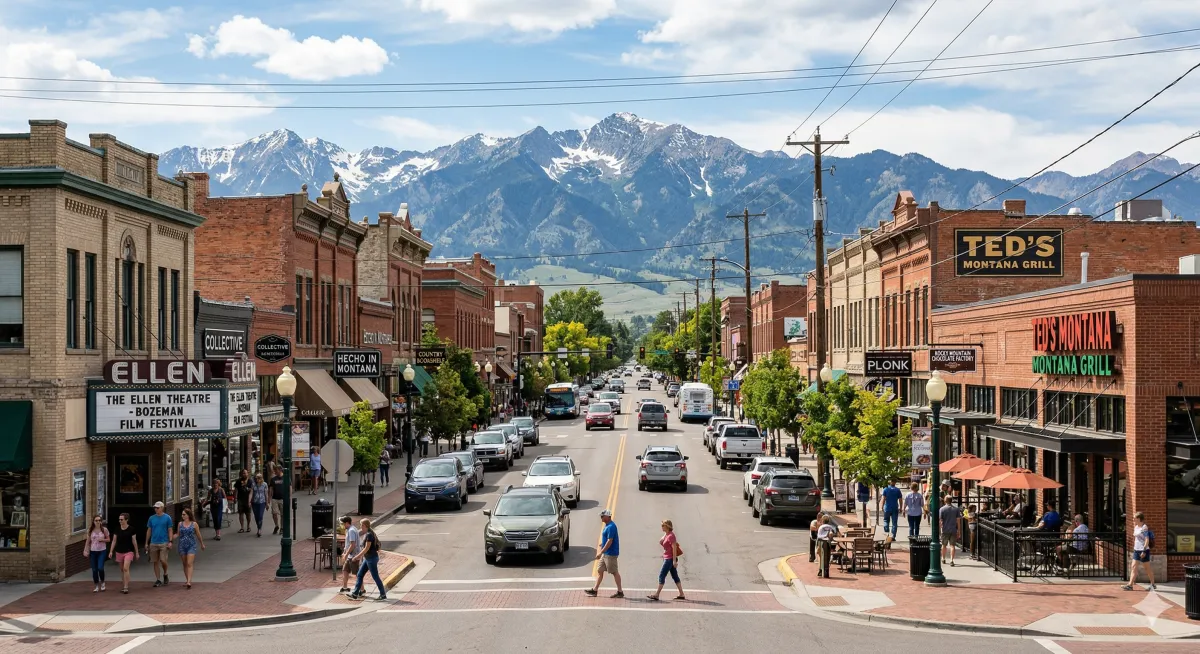
Living in Bozeman means living with real seasons and a town that has grown fast. The city sits at about 4,820 feet in the Gallatin Valley, ringed by mountains, with a humid continental climate that swings from single digits in winter to the low 80s in summer, according to Weather Spark's Bozeman climate data. The elevation keeps summers cool at night and winters long.
The town itself has changed. Bozeman's population is now around 59,900 and still growing near 1.8 percent a year, per World Population Review, after a stretch in the 2010s that made it one of the fastest-growing small metros in the country. Montana State University adds more than 17,000 students when it is in session, per MSU's own enrollment facts, which shapes the rhythm of the year as much as the weather does.
One honest note before we go season by season. You will hear that Bozeman gets "300 days of sunshine." It is a lovely line, and it is not really true. NOAA-based figures compiled by Current Results put Bozeman closer to 188 sunny days a year. It is a bright place, but plan your life around the real number, not the bumper sticker.
Here is the year at a glance:
Season Months Typical Weather What Locals Know Winter Dec–Feb Highs in the low 30s, lows in the teens, cold snaps below zero, around 80 inches of snow for the year Bridger Bowl "cold smoke" powder, valley inversions trap haze, plan for winter driving and dark afternoons Spring Mar–May Wide daily swings, mud, snow possible into May Mud season is real, false springs tease then snow returns, runoff swells the rivers Summer Jun–Aug Highs in the low 80s, nights near 50, long daylight Yellowstone traffic peaks, farmers markets and festivals fill up, late summer can bring wildfire smoke Fall Sep–Nov Crisp days, cool nights, first snows by late October The local favorite, MSU back in session, hunting season, quieter once the tourists leave
What are Bozeman winters really like?
Bozeman winters are long, cold, and snowy, and they are the season that most surprises newcomers. December through February brings average highs in the low 30s and lows in the teens, with cold snaps that drop below zero, and the city collects around 80 inches of snow across the year per the same climate data. Daylight is short, and the sun drops behind the mountains early.
For a lot of people, winter is the reason to be here. Bridger Bowl, the locally owned nonprofit ski area sixteen miles north of town, averages over 350 inches of snow and is known for the dry, light powder locals call "cold smoke." A season pass at a mountain fifteen minutes from your driveway is a genuine perk of living here, not a vacation.
The honest side: it is a real winter. Roads get icy, you will need proper tires and a warm coat, and the valley sometimes traps a temperature inversion that holds cold, hazy air in place for days. Winter driving between towns is its own skill, which is part of why my post on commute times across the Gallatin Valley includes winter adjustments. Some people find the long dark stretch of January hard. Others would not trade the quiet snowy mornings for anything.
What happens in spring in Bozeman?
Spring in Bozeman is the least postcard-worthy season, and locals just call it mud season. From March into May, the days swing wildly, snow can still fall well into spring, and the melt turns trails, driveways, and dog paws to mud. It is the price of everything green that comes after.
This is the season newcomers underestimate. A warm week in March feels like spring has arrived, then another foot of snow shows up. The ski areas can close on short notice when the snowpack goes: in 2026, Bridger Bowl closed on March 22, weeks ahead of schedule, after a thin snow year. Meanwhile the snowmelt swells the Gallatin and East Gallatin rivers, and the growing season here is short, only about 107 days, so gardeners wait longer than they expect to plant.
The upside is real too. Spring is when the valley greens up, the rivers run high for fishing and floating, and the town is still quiet before summer. It is not pretty in the way summer is, but it is the turn everyone waits for.
What is summer like in Bozeman?
Summer is Bozeman at its most beautiful and its most crowded. June through August brings comfortable highs in the low 80s, cool nights near 50, and long daylight that stretches past 9 p.m. It is close to perfect weather, and the whole region knows it.
That is the catch. Bozeman sits at the north end of the road to Yellowstone National Park, so summer is peak tourist season, and traffic on Main Street and the highways south of town reflects it. Downtown fills up, the farmers markets and summer festivals hit their stride, and the trailheads get busy. If you love a lively town, this is the payoff for the long winter.
The honest downside arrives in late summer: wildfire smoke. Some years, smoke from fires in the Northwest, Idaho, or Canada settles into the valley in August and September and pushes air quality down for days at a time. The City of Bozeman keeps a heat and wildfire smoke resource page, and the Montana DEQ publishes smoke forecasts through fire season. It does not happen every year, and it is rarely the whole season, but it is real, and anyone with breathing sensitivities should know about it before they move.
What about fall in Bozeman?
Fall is the season locals quietly hope you do not find out about. September through November brings crisp blue days, cool nights, golden cottonwoods along the rivers, and the first snows dusting the Bridgers by late October. Ask longtime residents their favorite season and most of them say fall without hesitating.
There is a practical rhythm to it. Montana State University is back in full session, which fills the town and the coffee shops again after the summer lull. Hunting season is a genuine part of the local calendar, not a niche hobby. The summer tourist crowds thin out, so restaurants and trails feel like they belong to residents again. The weather is a gift and a warning at once, gorgeous most days, with winter clearly loading up behind it.
If you are trying to judge whether Bozeman fits you, visit in late September or October, not July. Fall shows you the town at its most livable and honest, doing its normal life rather than performing for visitors.
How does Bozeman's growth affect daily life?
Bozeman's fast growth is the single biggest change to daily life here, and it cuts both ways. More people has meant more restaurants, more direct flights, and more to do, along with more traffic, higher housing costs, and a town that no longer feels like a secret. This is the honest tension every current resident lives with.
The numbers tell the story. The cost of living runs about $2,524 a month for a single person, a few percent above the national average, per livingcost.org's Bozeman data, with housing as the main driver. Traffic that barely existed a decade ago is now a real part of the day at certain hours. And the housing market has climbed to the point that many buyers look to Belgrade, Manhattan, or Three Forks for value, which is a big reason my neighborhood and market posts spend so much time on the towns around Bozeman rather than just the city.
None of this means the growth has ruined the place. It means Bozeman in 2026 is a small city, not a sleepy town, and it helps to arrive expecting that. The mountains, the rivers, and the access to the outdoors are exactly as advertised. The quiet, cheap version of Bozeman that people remember from twenty years ago is the part that has changed.
Who thrives living in Bozeman year-round, and who struggles?
People who love the outdoors and genuinely like weather tend to thrive in Bozeman, and people who need mild winters, short commutes to a major airport hub, or big-city amenities tend to struggle. The single best predictor is how you feel about winter, because winter here is long and unavoidable.
You will likely love it here if you ski, hike, fish, hunt, or just want mountains out every window, if a snowy six-month stretch sounds cozy rather than punishing, and if you value a tight, active community over big-city variety. Plenty of people build a wonderful life here around exactly those things.
You may find it harder if long winters wear on you, if you need the services and nightlife of a large city, or if the current cost of housing stretches your budget past comfort. There is no shame in learning a place is not your fit. The people who move here, understand the seasons, and stay tend to be the ones who came in clear-eyed about the tradeoffs, which is the whole point of a post like this. If you are weighing the practical side of a move, my relocating to the Gallatin Valley guide walks through the logistics season by season.
Frequently asked questions
Is Bozeman a good place to live year-round?
For the right person, yes. Bozeman offers four real seasons, world-class outdoor access, a strong community, and a growing local economy. It suits people who love the outdoors and do not mind long winters. It is harder for people who need mild weather, big-city amenities, or lower housing costs, since Bozeman has grown into a small city with prices to match.
How cold does Bozeman get in winter?
Winter highs average in the low 30s and lows in the teens, with cold snaps that drop below zero during the coldest stretches. Bozeman collects roughly 80 inches of snow across the year, and winters are long, running from about November into April. Proper tires, warm layers, and comfort with winter driving are close to essential.
Does Bozeman really get 300 days of sunshine?
No. The "300 days of sunshine" line is popular local marketing, but NOAA-based data puts Bozeman closer to 188 sunny days a year. It is a bright place with a lot of blue sky, especially in winter, but the 300-day figure overstates it. Plan around the real number.
What is mud season in Bozeman?
Mud season is the local name for spring, roughly March into May, when melting snow turns trails, yards, and roads to mud, and snow can still fall late into the season. It is the least scenic time of year, with wide temperature swings and swelling rivers from runoff, but it leads into the green of summer.
Does Bozeman get wildfire smoke?
Some years, yes. In late summer, usually August and September, smoke from regional wildfires in the Northwest, Idaho, or Canada can settle into the valley and lower air quality for days at a time. It does not happen every year and rarely lasts the whole season, but people with breathing sensitivities should factor it in.
How has Bozeman changed with population growth?
Bozeman has grown to around 59,900 residents, still expanding near 1.8 percent a year after a rapid 2010s. Growth has brought more restaurants, flights, and amenities, along with more traffic and higher housing costs. It now feels like a small city rather than a quiet town, which shapes daily life and pushes many buyers to nearby communities for value.
When is the best time to visit Bozeman before moving there?
Late September or October. Fall shows Bozeman at its most livable: crisp weather, fewer tourists, and the town in its normal rhythm with Montana State University back in session. Visiting in peak summer gives a misleading picture, since the weather and crowds are both at their most extreme.
What do people love most about living in Bozeman?
Most residents point to the outdoor access first: skiing at Bridger Bowl, fishing the Gallatin, hiking straight from town, and proximity to Yellowstone. Close behind is the community and the pace of a place that is active and connected without being a major metro. Fall, quietly, is many locals' favorite part of the year.
Nancy Clark
Broker/Owner, AmeriMont Broker Group
Manhattan, Montana
[email protected]
nancyclarkbroker.com
Nancy Clark is the Broker and Owner of AmeriMont Broker Group, serving Manhattan, Amsterdam, Churchill, and communities across southwest Montana. With more than $135 million in closed sales and over a decade of experience in Montana real estate, Nancy brings the care of a neighbor and the skill of a seasoned professional to every transaction. Reach her at [email protected] or visit nancyclarkbroker.com.


