Independence Day, America's 250th, and the Dream of Owning a Piece of It
On the Fourth of July, a look at how the promise of 1776 built the Gallatin Valley.
Two hundred fifty years ago today, a group of Americans signed their names to a promise that ordinary people could govern themselves and build their own lives on their own ground. This Fourth of July, as the country marks its 250th birthday, it is worth remembering that the promise of 1776 came to the Gallatin Valley in a very concrete form: the chance to own land, prove up on it, and pass it down. That is a story worth telling with pride.
In short: July 4, 2026 is the 250th anniversary of American independence. In Montana, the founding ideal of liberty took root through land, first the Homestead Act, then the settlers who turned the Gallatin Valley into the Garden of Montana. The dream of owning a piece of this country is the same one that brings families here today.
What are we celebrating on July 4, 2026?
Today marks 250 years since the signing of the Declaration of Independence in 1776. The nation is celebrating its Semiquincentennial, coordinated by America250, the nonpartisan effort established by Congress to mark the anniversary and, in its own words, to strengthen love of country and renew our commitment to the ideals the founders set down.
It is a genuine milestone. Very few nations reach 250 years, and fewer still do it holding to a founding promise written at the start. The National Park Service is marking the 250th at historic sites across the country, and communities in every state, including right here in the Gallatin Valley, are raising the flag a little higher this year.
The heart of it is the idea in the Declaration of Independence itself: that people have the right to life, liberty, and the pursuit of happiness, and that government exists to serve the governed, not the other way around. For millions of Americans, the pursuit of happiness took a very practical shape. It meant a place to call your own.
How did the promise of 1776 become the promise of owning land?
The founding ideal that any citizen could rise by their own effort became national law in 1862, when President Abraham Lincoln signed the Homestead Act. It offered 160 acres of public land to any citizen willing to live on it, farm it, and improve it, with full ownership after five years of proving up.
This was a radical promise for its time. In much of the world, land belonged to the wealthy and the titled, and an ordinary family had no path to owning any of it. The Homestead Act said the opposite: that a farmer, a widow, a freed slave, or an immigrant who had just become a citizen could claim a piece of the country and, through their own work, make it theirs. Over the life of the program, that promise transferred hundreds of millions of acres into the hands of everyday Americans.
It was not charity, and it was not easy. Proving up meant building a home, breaking the soil, and surviving winters with little margin for error. The deed at the end was earned. That combination of opportunity and grit is about as American as anything gets.
How did homesteaders build the Gallatin Valley?
Montana became the great stage for the homesteading dream, and the Gallatin Valley was one of its brightest chapters. The 160-acre claim was too small for Montana's dry conditions, so the Enlarged Homestead Act of 1909 doubled it to 320 acres and later shortened the proving-up period to three years. The result was a flood of settlers.
More than 80,000 homesteaders arrived in Montana between 1909 and the early 1920s, drawn by good rainfall, high wartime wheat prices, and heavy railroad promotion. According to the Montana Historical Society, the boom peaked in 1918, when homesteaders filed 14,178 claims on 3.2 million acres in a single year.
The Gallatin Valley had already earned its nickname. Lewis and Clark passed through in 1805 and 1806 and left the first written description of the place, and early settlers called it the Valley of the Flowers, while John Bozeman dubbed it the Garden of Montana. By 1864, the first wheat crop was in the ground, and the valley grew potatoes and grain to feed the miners at Virginia City. In 1889, Montana joined the Union as the 41st state, per the Gallatin County history record. The valley's rich soil and hard-working families did the rest.
The honest part of the story belongs here too. Many homesteaders were defeated by the droughts of the 1920s and walked away from claims they could not sustain, and the land the homesteaders settled had been home to Native peoples for thousands of years before them. But the families who held on built the farms, the towns, and the churches that still anchor this valley. Their names are on the roads. Their descendants are still our neighbors.
Here is the throughline, from the founding to today:
| Year | Milestone | Why It Matters |
|---|---|---|
| 1776 | Declaration of Independence signed | The founding promise of liberty and self-government |
| 1805–1806 | Lewis and Clark describe the Gallatin Valley | First written record of the Valley of the Flowers |
| 1862 | Homestead Act signed by President Lincoln | 160 acres for any citizen willing to work it |
| 1864 | Town of Bozeman founded, first valley wheat crop | The Gallatin becomes the Garden of Montana |
| 1889 | Montana becomes the 41st state | From territory to a full partner in the Union |
| 1909 | Enlarged Homestead Act, 320 acres | Sparks Montana's homesteading boom |
| 1918 | Peak homesteading, 14,178 claims on 3.2 million acres | The high-water mark of the land dream |
| 2026 | America's 250th Independence Day | The promise, still alive in every deed |
What does owning a piece of Montana mean today?
The homestead era is over, but the dream behind it is not. The same longing that pulled families across the country with a wagon and a filing fee still pulls them here: the desire to own a home, put down roots, and hand something lasting to their children. The form has changed. The heart of it has not.
Owning a home today is the modern version of proving up. It still takes work, sacrifice, and a little grit, and the deed at the end still means something. Whether it is a first house in Belgrade, a few acres near Bozeman, or a place to retire and watch grandchildren grow, buying a home in this valley is a family staking its own small claim in a country that, uniquely, was built to let them.
That is the part of this work I never take for granted. Helping a family find their piece of Montana is a small link in a very long chain that runs all the way back to 1776. If you are dreaming of your own place here, my guide to living in Bozeman year-round and the financing options for buyers are good places to start.
How does the Gallatin Valley celebrate the Fourth?
The valley celebrates Independence Day the way small-town America always has, with parades, flags on Main Street, rodeos, barbecues, and fireworks after dark. Towns across the Gallatin, from Bozeman and Belgrade to Manhattan and Three Forks, mark the day with the kind of neighborly, flag-waving pride that feels especially fitting in a 250th year.
If you are new to the valley, the Fourth is one of the best days to feel what makes it home. You will see three generations of a family on the same curb, veterans walking in the parade, and kids with flags and sticky fingers. My post on Gallatin Valley events and traditions covers the local calendar, but the Fourth needs no introduction. Show up, stand for the flag, and you are one of us.
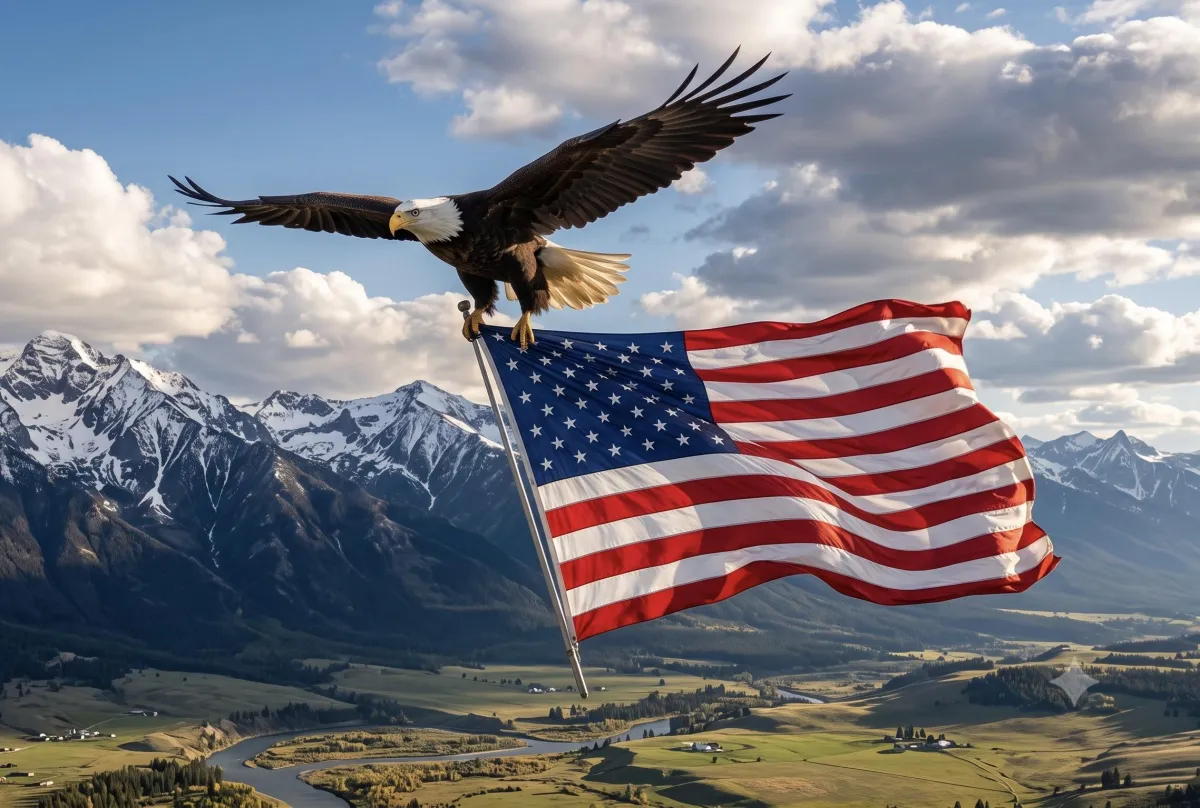
This year, take an extra minute. Two hundred fifty years is a long time to keep a promise, and the flag flying over this valley today is the same one those homesteaders raised over their first cabins. That is worth celebrating with a full heart.
Happy Independence Day. Blessed in the Big Sky.
Frequently asked questions
What is America celebrating on July 4, 2026?
July 4, 2026 is the 250th anniversary of the signing of the Declaration of Independence in 1776, known as the Semiquincentennial. It is coordinated nationally by America250, a nonpartisan effort established by Congress to mark the milestone, honor the country's history, and renew commitment to its founding ideals.
What was the Homestead Act?
The Homestead Act of 1862, signed by President Abraham Lincoln, offered 160 acres of public land to any citizen willing to live on, farm, and improve it, granting full ownership after five years of proving up. It opened land ownership to ordinary Americans and transferred hundreds of millions of acres into private hands over its history.
How did homesteading shape the Gallatin Valley?
The Enlarged Homestead Act of 1909 doubled claims to 320 acres and drew more than 80,000 homesteaders to Montana between 1909 and the early 1920s. Combined with the valley's rich soil, this settlement wave built the farms and towns of the Gallatin Valley, which Lewis and Clark had described in 1805 as the Valley of the Flowers.
When did Montana become a state?
Montana became the 41st state on November 8, 1889, when President Benjamin Harrison signed it into the Union. By then the Gallatin Valley was already an established agricultural center, growing wheat and potatoes and building the communities that still define southwest Montana today.
How do Gallatin Valley towns celebrate the Fourth of July?
Communities across the valley, including Bozeman, Belgrade, Manhattan, and Three Forks, celebrate with parades, rodeos, barbecues, flags along Main Street, and evening fireworks. It is classic small-town America, and one of the best days of the year to experience the neighborly character of the Gallatin Valley firsthand.
Is owning land still part of the American dream?
Yes. While the homestead era ended long ago, the dream behind it, owning a home and putting down roots, remains central to American life. Buying a home in the Gallatin Valley today is the modern version of proving up: a family staking its own claim and building something lasting to pass down.
Nancy Clark
Broker/Owner, AmeriMont Broker Group
Manhattan, Montana
[email protected]
nancyclarkbroker.com
Nancy Clark is the Broker and Owner of AmeriMont Broker Group, serving Manhattan, Amsterdam, Churchill, and communities across southwest Montana. With more than $135 million in closed sales and over a decade of experience in Montana real estate, Nancy brings the care of a neighbor and the skill of a seasoned professional to every transaction. Reach her at [email protected] or visit nancyclarkbroker.com.


